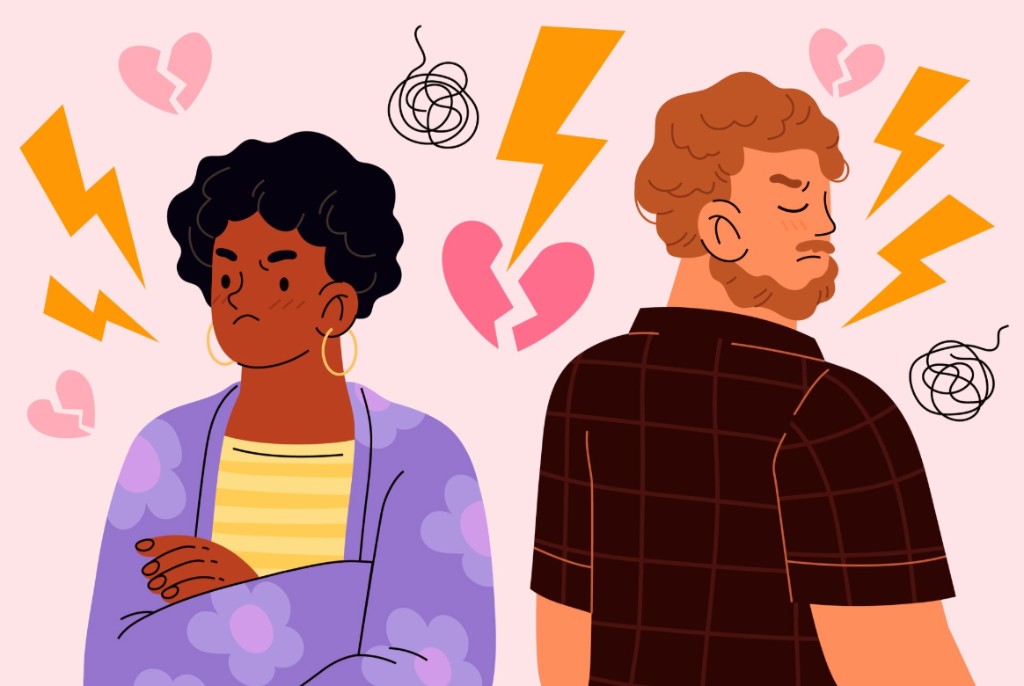
This article has been reviewed by Laura Caruso, licensed therapist and relationship expert, to ensure that the guidance on recognising the stages of a dying marriage — and repairing it where possible — is compassionate, realistic, and grounded in current research on relationships.
What are the signs of a failing marriage?
Everyone talks about the beginning stages of marriage — the infamous honeymoon phase, the positivity of a new chapter as newlyweds, and all the joy that comes with those early years.
Not many people like to bring up the other side or address the stages of a dying marriage that many couples have to go through. Even though it is not as poetic or romantic, being able to spot and address the signs that a marriage is in trouble can help you take action before you ever reach the final stages.
With the help of licensed therapist and relationship expert Laura Caruso, this guide explores those stages head‑on, along with practical ideas to help you turn things around.
How do you determine when a marriage is over?
Everyone enters marriage with the hope of forever, but when things start to go from bad to worse, it can be hard to know when you have moved from a rough patch into a full marriage breakdown.
Spotting signs of a dying marriage is less about having a therapist’s eye and more about being willing to accept that your underlying issues have become the norm every single day.
According to Laura Caruso, there are several common signs that a marriage is entering its closing stages, from communication breakdowns to deep disillusionment. If you recognise the patterns below in your own relationship, your marriage may be headed in the wrong direction — but that does not automatically mean it is beyond repair.
Signs your marriage is in trouble, according to an expert
1 Irreparable breakdowns in communication, connection, and basic respect are usually key indicators that a marriage is over or close to it.
2 When both partners consistently avoid each other to escape conflict or discomfort, it suggests a deep disengagement from the relationship. Over time, this avoidance becomes a default response to any interaction, reflecting a loss of willingness to maintain the partnership.
3 Neither partner attempts to resolve disagreements or repair hurt. Conflicts are left to fester, apologies never quite land, and both people quietly stop investing in the future of the relationship.
4 A profound disconnect can set in, where partners no longer share their thoughts, feelings, or even the details of their everyday lives. Many couples at this stage say they feel more like roommates or strangers than partners.
5 Sexual and emotional intimacy often decline sharply or disappear entirely, signalling a deep rift between partners.
6 Neither partner reacts much to the other’s positive or negative actions. This emotional flatness may look calm from the outside, but usually reflects a level of disengagement that is hard to reverse without major effort.
7 Long before a couple reaches total disengagement, smaller shifts can hint that a marriage is in trouble, even if neither partner is using the word “breakdown” yet.
8 Communication begins to deteriorate. You find yourselves caught in frequent misunderstandings, snapping at each other, or avoiding certain topics altogether because they always end in a fight.
9 Conflicts become more frequent and more intense, often over seemingly trivial matters. Arguments may not lead anywhere productive, but they still leave you feeling drained and defensive.
10 Feeling emotionally disconnected from each other is another red flag. You might feel like roommates moving through parallel routines, with little emotional sharing, support, or empathy.
11 Physical intimacy and sex start to decline. You may hold hands and hug less, skip the usual goodnight kiss, or avoid sex entirely, which often signals that deeper issues are going unaddressed.
12 You or your partner avoid spending time together, fantasise about being single, or notice growing feelings of discontent or resentment toward each other — all strong signs that the relationship is quietly eroding.
Early clues that your marriage might be slipping
The twelve signs above often begin as subtle shifts rather than dramatic crises, which is why many couples miss them in the moment.
Paying attention to these early clues — and talking about them honestly when they show up — can give you a much better chance of turning things around before your marriage reaches the later stages of breakdown.
What are the common stages of a dying marriage?
Every long‑term relationship goes through ups and downs. Rough patches, arguments, and seasons of distance do not automatically mean a marriage is doomed.
However, when you ignore your feelings of loneliness or keep sweeping recurring arguments under the rug, the embers of your connection can be much harder to reignite later on.
If you have started to lead separate lives or your lack of communication has become completely normal, you may have already entered the early stages of a dying marriage without realising it.
Several researchers and psychologists have mapped out typical stages of failing relationships, and Caruso notes that their findings often overlap. Together, they point to predictable patterns that tend to appear before a marriage dissolves.
Drawing on her own clinical observations, as well as Dr. Helen Fisher’s rebuilding model and Dr. Mark Knapp’s relationship development model, Caruso identifies four stages of a failing marriage: hostility, disconnection, desperation, and despair.
Stage 1: Hostility
1 Without healthy communication, even small individual differences between partners can turn into ongoing conflict.
At this stage, partners often begin to criticise or show contempt for each other, become defensive, or withdraw altogether — the same four negative communication behaviours that psychologist Dr. John Gottman famously identified as predictors of divorce, sometimes called the “Four Horsemen” (criticism, contempt, defensiveness, and stonewalling).
Arguments may feel like battles to be won rather than problems to be solved. You may notice more name‑calling, eye‑rolling, or sarcasm, and fewer moments of genuine curiosity or repair after a fight.
Stage 2: Disconnection
2 As hostility and unresolved conflict pile up, emotional distance tends to grow.
Couples in this stage often describe a heavy sense of loneliness that develops slowly over time. Certain topics become completely off‑limits, sex becomes more infrequent, and the relationship can start to feel stuck or stale.
You might still share a home and routines, but emotional intimacy, shared dreams, and playful moments have faded into the background. It may feel safer to keep the peace than to risk another argument by saying what you really feel.
Stage 3: Desperation
3 In many couples, one partner — often someone with a more anxious attachment style — eventually shifts into overdrive to try to save the relationship.
They may pour their heart and soul into repair attempts: suggesting couples therapy, planning more quality time, initiating sex more frequently, or over‑communicating their feelings and needs.
Grand gestures, such as surprise vacations, elaborate date nights, or even renewing vows, might appear in the hope of rekindling the spark.
While these efforts sometimes create temporary closeness, they can also deepen the imbalance if the other partner remains emotionally shut down or unwilling to meet in the middle.
Stage 4: Despair
4 When partners do not know how to communicate or resolve conflict in ways that actually bridge the gap between them, avoidance often takes over.
At this point, both people may start deliberately avoiding each other to minimise discomfort. They stay busy with work, parenting, or hobbies, spend more time outside the home, or retreat into separate rooms when they are together.
This level of avoidance makes it very difficult to repair the relationship because it removes the very contact and vulnerability needed for healing.
Despair is typically marked by a deep sense of hopelessness about the future of the marriage, along with a withdrawal of effort from one or both partners. For many couples, this is the stage where the relationship eventually ends.

Can you repair a failing marriage?
If you recognise your current situation in any of the stages above, it does not automatically mean your marriage is over.
The key is to stop the slide toward the next stage and to focus your energy on rebuilding safety and connection instead of scoring points or proving who is right.
Caruso emphasises that, in theory, any marriage can be saved if both partners are genuinely willing and committed to repairing the relationship.
The longer painful patterns go unchecked, the harder it becomes to repair them. Once communication has broken down and both partners feel unheard, it is much more difficult to reach a place of productive healing.
Repairing a marriage usually requires both individual work and shared relational work. It is an inherently vulnerable process that asks couples to expose their deepest fears, desires, and insecurities in hopes of finding common ground.
Many couples wait until they are already in the despair stage before seeking therapy. Caruso notes that when couples lean on professional support earlier in the process, they are far more likely to repair the relationship.
How do you know when a marriage cannot be saved?
While many couples do manage to turn their marriage around, divorce rates make it clear that not every relationship can or should be saved.
Sometimes, especially once you have moved past desperation into full despair, the most compassionate choice is to acknowledge that the relationship has reached its limit.
Caruso explains that a relationship is unlikely to be salvageable when both partners feel hopeless about the future and have largely withdrawn their effort. At this stage, one or both people may be wishing for a completely new start and no longer see a realistic path to reconciliation.
This does not always involve dramatic events like cheating or someone walking out overnight. Often, it is two people who have tried their best in their own ways, and who ultimately decide it is time to lay down their weapons and raise the white flag.
Why is it so hard to walk away from a failing marriage?
Even when you know deep down that your marriage is over, actually leaving is rarely simple. Calling a divorce attorney or starting a separation can feel terrifying, even when staying feels unbearable.
Love. Many people genuinely still care about their spouse, even when the romantic connection has faded. You might love who they are as a person or co‑parent, which makes letting go feel like a betrayal of that history.
Emotional investment. Couples pour enormous emotional, physical, and financial energy into their relationships. Dependence — whether emotional, practical, or financial — can make the prospect of leaving feel impossible.
Fear of the unknown. Leaving a marriage means stepping into uncertainty: being alone, navigating life admin on your own, or facing the idea of dating again. That unknown can feel more frightening than an unhappy but familiar routine.
Impact on children. Concerns about how divorce will affect children often play a major role in the decision to stay. The old idea of “staying together for the kids” persists, even though research shows that ongoing conflict and unhappiness between parents can be just as damaging.
Divorce stigma. In many cultures and communities, divorce still carries a sense of shame or failure. Fear of judgement from friends, family, or faith communities can keep couples in relationships that no longer feel safe or fulfilling.
Crisis of identity. When you have defined yourself through your marriage for years, the idea of being single again can trigger a crisis of identity and self‑worth. People may question their judgement, attractiveness, or value as a partner, which can make it tempting to cling to what is familiar.
Choosing yourself is not a failure
Whether you decide to fight for your marriage or walk away, remember that both paths require immense courage.
Leaving a broken marriage should not be seen as a personal failure. Sometimes the bravest thing you can do is accept that a relationship that once mattered deeply no longer supports your wellbeing.
You deserve relationships where you feel respected, seen, and emotionally safe. Whatever happens next, there is life on the other side of this chapter — and you do not have to navigate it alone.